
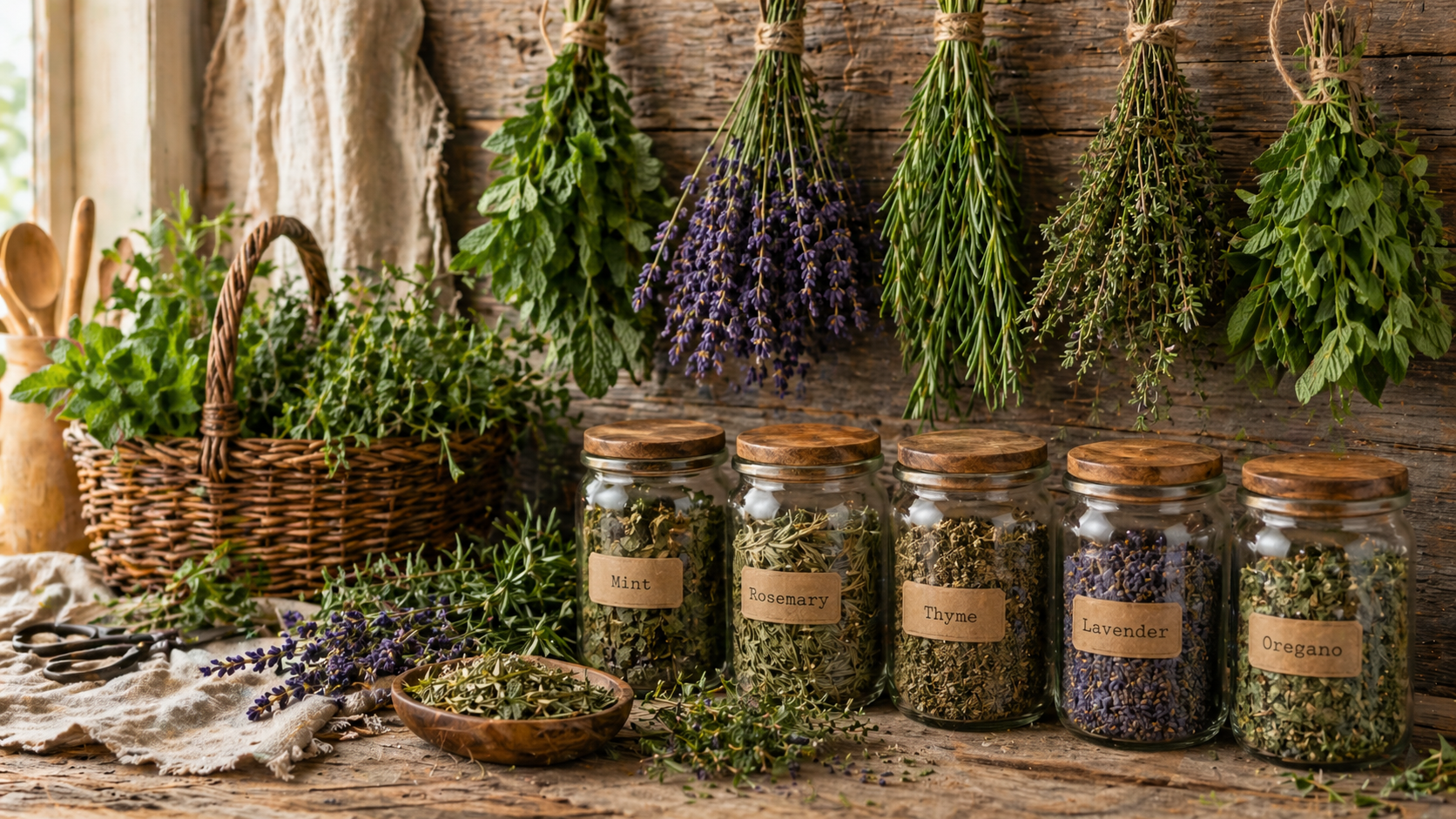
How to Dry Herbs: 7 Easy Steps + The Ultimate Herb Drying Chart
Fresh herbs make simple meals taste brighter, fresher, and more homemade. But basil, mint, rosemary, thyme, parsley, and oregano do not stay fresh forever. When your herb garden, balcony pots, or grocery store herbs grow faster than you can use them, learning how to dry herbs is one of the easiest ways to preserve their flavor.
This guide is made to help you find the answer fast. If you came here for a quick herb drying chart, you will find it near the top. If you want to learn how to dry herbs step by step, you will find the full guide right after the chart.
You will also learn how to prepare fresh herbs, which drying method works best, how long different herbs take to dry, how to store dried herbs, and how to preserve herbs in other simple ways.
Whether you have a large garden, a small patio, a sunny windowsill, or a few fresh herb bunches from the grocery store, this guide will show you how to dry herbs at home in a simple, practical way.
Table of Contents
Quick Answer: How to Dry Herbs at Home
The easiest way to dry herbs is to harvest them in the morning after the dew has dried, remove damaged leaves, spread them in a single layer, and dry them with air drying, a dehydrator, or a low temperature oven.
Once the herbs are fully dry and crumble easily, store them in airtight glass jars in a cool, dark place.
If you want to know how to dry herbs without special equipment, start with air drying. If your home is humid or you want more reliable results, use a dehydrator or a very low oven.
Herb Drying Chart: Best Methods, Drying Times, and Storage Life
This herb drying chart gives you a quick overview before you choose a method. It is useful when you already know how to dry herbs but want to check the best method and drying time for each herb.
| Herb | Best Drying Method | Air Drying Time | Dehydrator Time | Oven Time | Best Use |
|---|---|---|---|---|---|
| Basil | Rack drying or dehydrator | 1 to 2 weeks | 4 to 8 hours | 1 to 2 hours | Pasta, tomato sauces, herb blends |
| Mint | Rack drying or hanging | 1 to 2 weeks | 4 to 8 hours | 1 to 2 hours | Tea, desserts, infused water |
| Rosemary | Hanging or dehydrator | 1 to 3 weeks | 6 to 12 hours | 1 to 2 hours | Potatoes, roasted vegetables, bread |
| Thyme | Hanging or dehydrator | 1 to 2 weeks | 4 to 8 hours | 1 to 2 hours | Soups, stews, chicken, vegetables |
| Oregano | Hanging or dehydrator | 1 to 2 weeks | 4 to 8 hours | 1 to 2 hours | Pizza, pasta sauce, Mediterranean dishes |
| Sage | Hanging or dehydrator | 1 to 2 weeks | 4 to 8 hours | 1 to 2 hours | Stuffing, butter, roasted dishes |
| Parsley | Dehydrator or rack drying | 1 to 2 weeks | 4 to 8 hours | 1 to 2 hours | Soups, sauces, garnish |
| Dill | Rack drying or dehydrator | 5 to 10 days | 3 to 6 hours | 1 hour | Pickles, fish, potatoes |
| Lemon Balm | Rack drying or dehydrator | 1 to 2 weeks | 4 to 8 hours | 1 to 2 hours | Tea, herbal blends, syrups |
| Lavender | Hanging or rack drying | 2 to 4 weeks | 6 to 12 hours | 1 to 2 hours | Tea blends, baking, sachets |
| Chamomile | Rack drying | 1 to 2 weeks | 4 to 8 hours | 1 to 2 hours | Tea, bath blends |
| Chives | Dehydrator or oven | Not ideal | 3 to 6 hours | 1 hour | Eggs, potatoes, dips |
Drying times can change depending on humidity, room temperature, airflow, and leaf thickness. Herbs are ready when the leaves feel crisp and crumble between your fingers.
Why Learn How to Dry Herbs?
Learning how to dry herbs helps you save money, reduce food waste, and enjoy your favorite herbs long after the growing season ends.
Fresh herbs are wonderful, but they can wilt quickly. Drying herbs gives you a simple way to keep basil, mint, oregano, rosemary, thyme, sage, parsley, and lemon balm ready for everyday cooking.
Dried herbs are perfect for soups, stews, sauces, tea blends, salad dressings, roasted vegetables, homemade spice mixes, herbal salts, infused oils, and pantry gifts.
Once you know how to dry herbs properly, you can turn a small harvest into a useful kitchen staple.
Best Herbs to Dry
Most garden herbs can be dried, but some herbs keep their flavor better than others.
The best herbs to dry include:
Basil, oregano, rosemary, thyme, sage, mint, dill, parsley, lavender, chamomile, lemon balm, marjoram, tarragon, and bay leaves.
Woody herbs like rosemary, thyme, oregano, and sage are especially easy to dry because they contain less moisture. Soft herbs like basil, parsley, mint, lemon balm, and dill need a little more care because they can brown or lose flavor if they dry too slowly.
If you are just learning how to dry herbs, start with rosemary, thyme, oregano, mint, or sage. They are forgiving and dry well with simple methods.
When to Harvest Herbs for Drying
The best time to harvest herbs is in the morning after the dew has dried but before the sun becomes too hot. This helps the herbs keep more of their natural aroma.
For leafy herbs, harvest before the plant flowers. Once herbs start flowering, the leaves can become less tender and the flavor may change.
For flower herbs like chamomile and lavender, harvest when the flowers are fully open but still fresh.
Avoid harvesting wet herbs. Moisture can slow down the drying process and increase the risk of mold.
Good timing matters when learning how to dry herbs because the flavor of dried herbs starts with the quality of the fresh harvest.
How to Prepare Herbs Before Drying
Before you dry herbs, sort through them carefully.
Remove yellow leaves, brown leaves, damaged stems, insects, and any leaves with spots. Clean herbs dry more evenly and store better.
Only rinse herbs if they are dirty. If you rinse them, pat them completely dry with a clean towel or use a salad spinner. Extra water is one of the biggest reasons dried herbs turn brown or moldy.
For most herbs, keep the leaves on the stems during drying. It makes the process easier, especially for air drying herbs in bundles.
Preparation is a small step, but it makes a big difference when you are learning how to dry herbs for better flavor and longer storage.
How to Dry Herbs: 7 Easy Steps
1. Choose fresh, healthy herbs
Start with herbs that look bright, fresh, and fragrant. The better the herbs are before drying, the better your dried herbs will taste later.
Do not dry herbs that are already wilted, slimy, yellow, or moldy.
2. Harvest at the right time
Pick herbs in the morning after the dew has dried. This is especially helpful for herbs like basil, mint, oregano, thyme, and rosemary.
3. Clean only if needed
Shake off soil or insects. Rinse only when necessary, then dry the herbs very well before moving to the next step.
4. Choose the right drying method
The best method depends on the herb and your climate. Air drying works well in dry homes. A dehydrator works well in humid climates. Oven drying is best when you need a faster option.
5. Dry herbs in small batches
Do not overcrowd the herbs. Whether you hang them, place them on racks, or use a dehydrator, the herbs need airflow.
6. Check for dryness
Herbs are fully dry when the leaves are crisp, light, and easy to crumble. Stems should snap instead of bend.
7. Store them correctly
Store dried herbs in airtight jars away from heat, light, and moisture. Label each jar with the herb name and date.
These seven steps give you the basic process for how to dry herbs safely and successfully at home.
Method 1: Air Drying Herbs
Air drying is the most traditional way to dry herbs. It works best for herbs with lower moisture, such as rosemary, thyme, oregano, sage, and lavender.
If you want to learn how to dry herbs without buying equipment, this is usually the easiest method.
How to air dry herbs
Gather 5 to 10 stems into a small bundle.
Tie the stems with kitchen string.
Hang the bundle upside down in a warm, dry, well ventilated place.
Keep the herbs away from direct sunlight.
Check them every few days.
Air drying herbs usually takes 1 to 3 weeks. The exact time depends on the herb, room temperature, and humidity.
This method is simple, low cost, and great for small herb harvests.
Method 2: Drying Herbs on a Rack
Rack drying is one of the best methods for soft herbs and delicate flowers. It works well for basil, mint, lemon balm, parsley, chamomile, calendula, and dill.
Rack drying is helpful when you want to know how to dry herbs that do not work well in thick hanging bundles.
How to dry herbs on a rack
Place herbs in a single layer on a drying rack, mesh screen, or clean towel.
Keep them in a dry room with good airflow.
Turn or gently move the herbs every few days.
Wait until the leaves or flowers are fully crisp.
Rack drying helps air move around the herbs. It also prevents thick bundles from holding too much moisture.
Method 3: Drying Herbs in a Dehydrator
A dehydrator is one of the easiest ways to dry herbs because it gives steady heat and airflow.
This method is especially useful in humid climates or small kitchens where air drying takes too long.
If you are searching for how to dry herbs with reliable results, a dehydrator is one of the best options.
How to dry herbs in a dehydrator
Spread herbs in a single layer on dehydrator trays.
Use a low temperature, usually around 95°F to 115°F or 35°C to 46°C.
Check the herbs every few hours.
Let the herbs cool before storing.
A dehydrator works well for basil, mint, parsley, oregano, thyme, rosemary, lemon balm, sage, and dill.
Method 4: Drying Herbs in the Oven
Oven drying is the fastest method, but it needs more attention. Heat can reduce flavor if the oven is too hot.
Use this method when you want to dry herbs quickly or when the weather is too humid for air drying.
Oven drying is also useful if you need a practical answer for how to dry herbs without waiting one or two weeks.
How to dry herbs in the oven
Set the oven to the lowest possible temperature.
Place herbs in a single layer on a baking sheet.
Leave the oven door slightly open if possible.
Check often so the herbs do not burn.
Remove them when they are crisp.
Oven drying herbs usually takes 1 to 2 hours, depending on the herb and your oven.
This method is helpful, but it is not always the most gentle. For the best flavor, use the lowest heat you can.
Best Drying Method by Herb
Basil
Basil has soft leaves and can turn dark if dried too slowly. Use a dehydrator or rack drying for best results. Keep it out of direct sunlight.
Mint
Mint dries well on racks or in small hanging bundles. It is perfect for tea, desserts, and homemade herbal blends.
Rosemary
Rosemary is one of the easiest herbs to dry. Hang small bundles or use a dehydrator. Once dry, strip the needles from the stem.
Thyme
Thyme dries quickly and keeps its flavor well. Hang it in small bundles or dry it in a dehydrator.
Oregano
Oregano is excellent for drying and becomes very useful in tomato sauces, pizza, and Mediterranean recipes.
Sage
Sage dries well and has a strong flavor. Store it whole and crumble it before use.
Parsley
Parsley can lose flavor quickly, so dry it gently. A dehydrator usually gives better results than hanging.
Dill
Dill is delicate. Dry it quickly on racks, in a dehydrator, or in a very low oven.
Lemon Balm
Lemon balm has a fresh lemon scent, but it can fade. Dry it gently and store it away from light.
Lavender
Lavender dries beautifully in small bundles. Use it for tea blends, baking, bath blends, or sachets.
This section is useful when you already know how to dry herbs but want to choose the best method for a specific herb.
How to Store Dried Herbs
Storing herbs correctly is just as important as drying them correctly.
Use clean, dry glass jars with tight lids. Store the jars in a dark cupboard, pantry, or spice drawer. Avoid placing dried herbs near the stove, oven, dishwasher, sunny windows, or sink.
Heat, light, air, and moisture can weaken the flavor of dried herbs.
For the best flavor, store dried herbs as whole leaves when possible. Crush them right before using them. Whole dried leaves usually keep their aroma better than crushed herbs.
Label each jar with the herb name, date dried, drying method, and optional notes.
Most dried leafy herbs taste best within 6 to 12 months. They may still be safe after that, but the flavor becomes weaker.
Once you know how to dry herbs, proper storage helps you keep the results fresh and useful for longer.
How to Preserve Herbs Beyond Drying
Drying herbs is one of the easiest preservation methods, but it is not the only one.
If you want to know how to preserve herbs in different ways, these are simple options:
Freeze herbs
Freezing works well for parsley, basil, cilantro, dill, and chives. Chop the herbs and freeze them in ice cube trays with water or olive oil.
Make herb salt
Blend chopped herbs with coarse salt and let the mixture dry. Herb salt is great for roasted vegetables, potatoes, eggs, and soups.
Make herb butter
Mix chopped herbs into softened butter, roll into a log, and freeze. This is delicious with bread, vegetables, fish, or chicken.
Make infused vinegar
Herbs can also be preserved in vinegar. This is a simple way to make flavored vinegar for salad dressings and marinades.
Make herbal tea blends
Mint, lemon balm, lavender, chamomile, and rosemary can be dried and mixed into homemade tea blends.
These ideas work well with drying because once you understand how to dry herbs, you can build your own homemade herb pantry.
Common Mistakes When Drying Herbs
Drying herbs in direct sunlight
Sunlight can fade color and reduce flavor. Always dry herbs in a shaded area.
Making bundles too large
Large bundles trap moisture inside. This can cause mold. Keep herb bundles small.
Storing herbs before they are fully dry
If herbs feel soft or bend instead of crumble, they are not ready. Storing herbs too early can cause moisture buildup.
Using too much heat
High heat can make herbs lose aroma. Use gentle heat whenever possible.
Crushing herbs too early
Crushed herbs lose flavor faster. Store dried herbs whole, then crush them when cooking.
These common mistakes are easy to avoid once you understand how to dry herbs with enough airflow, low heat, and proper storage.
How to Know When Herbs Are Fully Dry
Herbs are ready for storage when they feel crisp and dry.
Leaves should crumble easily between your fingers. Stems should snap instead of bend. Flowers should feel dry and papery.
If the herbs still feel flexible, soft, damp, or cool to the touch, give them more time.
When in doubt, dry them longer before storing.
This is one of the most important parts of learning how to dry herbs because even a little extra moisture can ruin a jar of dried herbs.
How to Use Dried Herbs in Cooking
Dried herbs are stronger than fresh herbs because the water has been removed. A simple rule is:
Use 1 teaspoon of dried herbs for every 1 tablespoon of fresh herbs.
Dried herbs work best in recipes that cook for a little while, such as soups, sauces, stews, roasted vegetables, and casseroles.
For the best flavor, rub dried herbs gently between your fingers before adding them to food. This helps release their aroma.
After you learn how to dry herbs, using them well in cooking is the next step.
Quick Herb Drying FAQ
What is the easiest way to dry herbs?
The easiest way to dry herbs is air drying. Tie small bundles and hang them upside down in a warm, dry, dark place with good airflow.
What is the fastest way to dry herbs?
The fastest way is oven drying, but it needs careful attention. A dehydrator is often the best balance between speed and flavor.
Can I dry herbs without a dehydrator?
Yes. You can air dry herbs, dry them on racks, or use a low temperature oven.
Should I wash herbs before drying?
Only wash herbs if they are dirty. If you wash them, dry them completely before drying. Extra moisture can cause mold.
How long do dried herbs last?
Most dried herbs taste best within 6 to 12 months when stored in airtight jars in a cool, dark place.
Why did my herbs turn brown?
Herbs can turn brown if they were dried with too much heat, too much sunlight, or too much moisture.
Can I dry herbs from the grocery store?
Yes. Grocery store herbs can be dried as long as they are fresh, clean, and not wilted.
What should I do if I forgot how to dry herbs correctly?
Start with the basics. Keep the herbs clean and dry, choose a low heat or air drying method, allow plenty of airflow, and store only when the leaves are crisp.
Final Thoughts
Learning how to dry herbs is a simple skill that makes your kitchen feel more seasonal, practical, and homemade. You do not need a big garden or expensive tools. A few fresh herbs, a little airflow, and the right storage jars are enough.
Use the herb drying chart when you need a quick answer. Come back to the step by step guide when you want to choose the best method, avoid common mistakes, or learn how to preserve herbs in different ways.
Once you know how to dry your herbs at home, you can keep the flavor of your garden, balcony pots, or favorite grocery store herbs ready for soups, teas, sauces, and cozy homemade meals.
Before you start drying your herbs, it is helpful to learn how to harvest and store herbs properly so they keep their flavor, freshness, and aroma from the garden to your kitchen.
If you also use herbs for wellness, teas, or home remedies, it is worth checking a professional medical source like the NCCIH guide to herbs and botanicals, which gives science based information on common herbs, possible uses, and safety considerations.
1 Comments
joe Kosiarski
May 6, 2026 at 3:51 pm
Very helpful andinformative!
Joe K.
Comments are closed.