
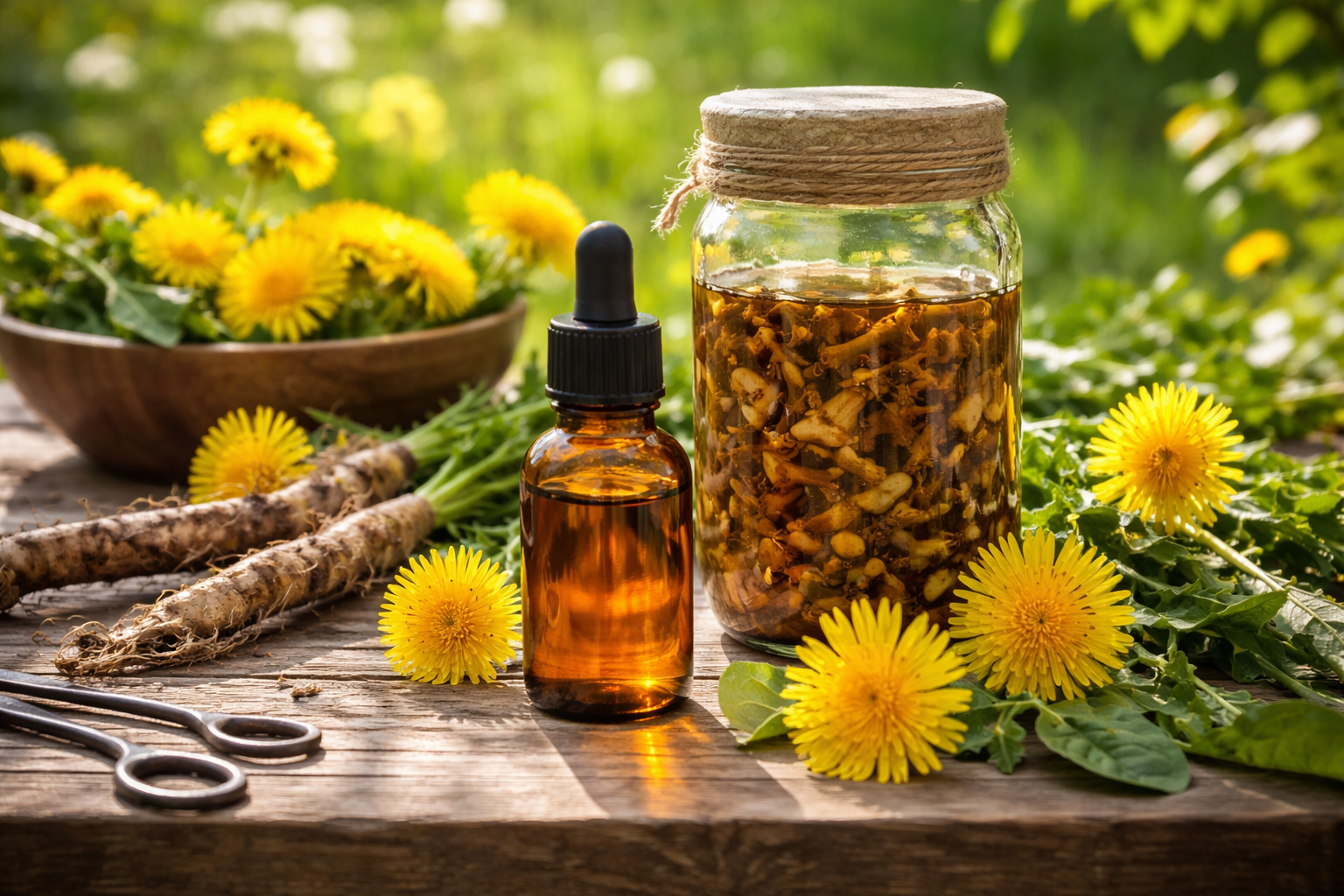
Dandelion Tincture: 5 Benefits, Uses, and How to Make It
Dandelion is often considered just a common garden weed, but in herbal medicine it has been valued for centuries as a useful medicinal plant. A dandelion tincture is one of the most effective ways to preserve the beneficial compounds of the plant and use them in a concentrated form.
In this guide you will learn what a dandelion tincture is, its potential benefits, and how you can easily make it at home.
Table of Contents
What Is Dandelion Tincture
It is a liquid herbal extract made by soaking dandelion roots, leaves, or flowers in alcohol. The alcohol extracts the active compounds from the plant and preserves them for long term storage.
Tinctures are widely used in herbal medicine because they are concentrated, easy to store, and simple to take using a dropper. The alcohol base allows the beneficial plant compounds to remain stable for several years.
Different parts of the dandelion plant provide different benefits. The root is most often used for liver and digestion support, while the leaves are known for their mild diuretic effect.
Dandelion Tincture Benefits
Dandelion contains vitamins, minerals, and plant compounds that may support several body systems.
Supports Liver Health
Dandelion root has traditionally been used to support liver function. Herbal practitioners believe it may stimulate bile production, which helps the body break down fats and remove waste products.
Supports Digestion
Dandelion is considered a bitter herb. Bitter herbs stimulate digestive enzymes and stomach acid, which may help improve digestion and reduce occasional bloating after meals.
Natural Diuretic
Dandelion leaves may support the body in removing excess water. Unlike many synthetic diuretics, dandelion also contains potassium, which helps maintain electrolyte balance.
Rich in Antioxidants
Dandelion contains antioxidants such as polyphenols and beta carotene. These compounds help protect cells from oxidative stress caused by free radicals.
May Support Skin Health
In traditional herbal practice, dandelion is often associated with clearer skin. Because the herb supports liver and digestion processes, it may indirectly support healthy skin.
How to Make Dandelion Tincture
Making a dandelion tincture at home is simple and requires only a few ingredients.
Ingredients
Fresh or dried dandelion root, leaves, or flowers
High proof alcohol such as vodka
A clean glass jar with a lid
A dropper bottle for storage
Instructions
- Prepare the plant material
Chop fresh dandelion roots into small pieces. If you use leaves or flowers, lightly crush them to release the plant compounds. - Fill the jar
Place the plant material into the jar until it is about halfway full. - Add alcohol
Pour alcohol over the herbs until they are completely covered. - Store the jar
Seal the jar and store it in a cool and dark place. - Shake regularly
Shake the jar gently every few days to help extract the plant compounds. - Wait 4 to 6 weeks
After several weeks, strain the liquid through a fine cloth or filter. - Bottle the tincture
Transfer the finished tincture into a dark glass dropper bottle for storage.
How to Use Dandelion Tincture
Dandelion tincture is usually taken in small amounts diluted in water. A common herbal recommendation is 20 to 30 drops in a small glass of water up to three times per day. However, dosage may vary depending on the concentration of the tincture.
Many people take it before meals to support digestion or as part of a seasonal herbal routine.
Dandelion Tincture Safety and Side Effects
Dandelion is generally considered safe for most people. However, individuals who are allergic to plants in the daisy family should avoid using it. People who take diuretic medication or have gallbladder conditions should consult a healthcare professional before using dandelion tincture.
Pregnant or breastfeeding individuals should also speak with a healthcare provider before using herbal tinctures.
Final Thoughts on Dandelion Tincture
Dandelion tincture is a simple herbal remedy that many people use to support digestion and liver health. Whether you buy it or make your own, adding dandelion tincture to your herbal routine can be an easy way to benefit from this traditional medicinal plant.
Learn More About Herbal Tinctures
If you enjoy making herbal remedies at home, you may also like this guide with more herbal preparations and recipes: 20 Herbal Tincture Recipes with Step by Step Instructions.
For more detailed medical information about the potential health effects and safety of dandelion, you can also review this overview from the National Center for Complementary and Integrative Health (NCCIH)