Lemon Balm Tincture: 5 Benefits and an Easy Recipe to Make at Home
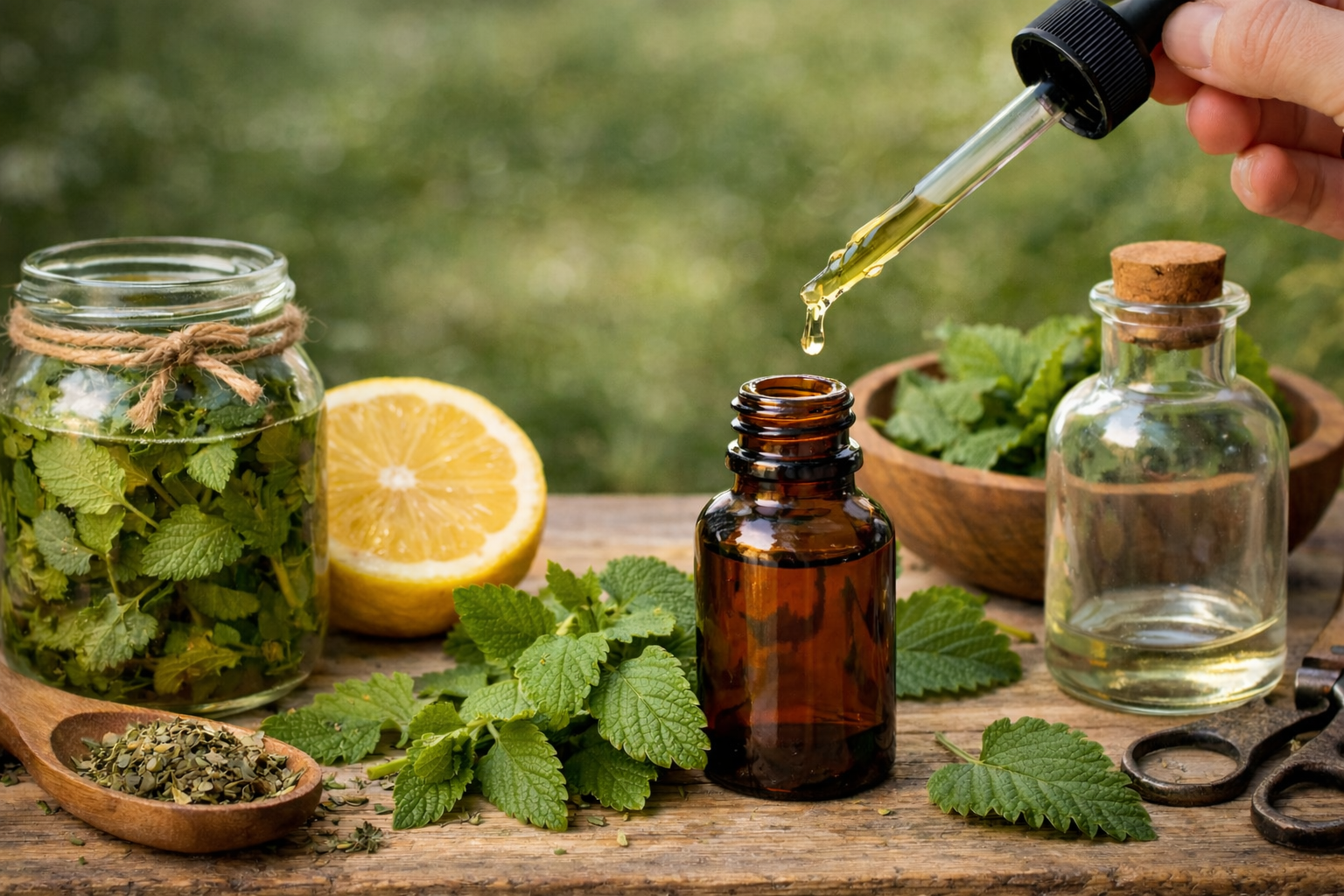
If you grow lemon balm in your garden, you may already know how fragrant and calming this herb is. But turning it into a lemon balm tincture is one of the most powerful ways to preserve its healing properties.
A tincture is simply a concentrated herbal extract made by soaking herbs in alcohol. This process pulls out the plant’s active compounds and creates a remedy that can last for years.
In this guide, you will learn:
- what a lemon balm tincture is
- the benefits of lemon balm tincture
- how to make lemon balm tincture at home
- how to use it safely
- the best infusion timeline
Let’s start with why herbalists love this plant so much.
Table of Contents
What Is Lemon Balm?
Lemon balm (Melissa officinalis) is a perennial herb from the mint family known for its gentle lemon scent and calming properties.
For centuries it has been used to support the nervous system, digestion, and sleep.
Modern research shows lemon balm contains polyphenols, rosmarinic acid, and antioxidant compounds that contribute to its medicinal effects.
Traditionally lemon balm has been used for:
- nervous tension
- anxiety
- sleep problems
- digestive discomfort
- viral infections such as cold sores
Turning the herb into a tincture makes these compounds easier for the body to absorb.
Lemon Balm Tincture Benefits
1. Supports Relaxation and Reduces Stress
One of the most well known uses of lemon balm is calming the nervous system.
Studies show lemon balm may interact with neurotransmitters such as GABA, which helps promote relaxation and reduce stress.
Many herbalists use lemon balm tincture to support:
- stress relief
- emotional balance
- nervous tension
2. May Improve Sleep Quality
Because of its calming effect, lemon balm is often used for sleep support.
It may help people fall asleep faster and improve sleep quality by reducing nervous system activity and promoting relaxation.
3. Supports Brain Function and Mood
Research suggests lemon balm may improve mood and cognitive performance.
Some studies observed improved alertness and better task performance after consuming lemon balm extracts.
4. Helps Digestion
Lemon balm has traditionally been used to soothe digestive discomfort.
It may help relieve:
- bloating
- gas
- indigestion
The herb acts as a mild antispasmodic for the digestive tract.
5. Provides Antioxidant and Anti-Inflammatory Support
Lemon balm contains compounds such as rosmarinic acid and flavonoids, which help fight oxidative stress and inflammation.
These compounds support overall wellness and cellular health.
Why a Tincture Works Better Than Tea
Tea is wonderful, but tinctures offer several advantages.
Higher concentration
Alcohol extracts more compounds than water.
Longer shelf life
A tincture can last 2 to 5 years when stored properly.
Fast absorption
Tinctures absorb quickly when taken under the tongue.
Easy dosing
You can take small drops whenever needed.
How to Make Lemon Balm Tincture (Easy Herbal Recipe)
Making lemon balm tincture is surprisingly simple.
All you need is fresh herbs, alcohol, and patience.
Ingredients
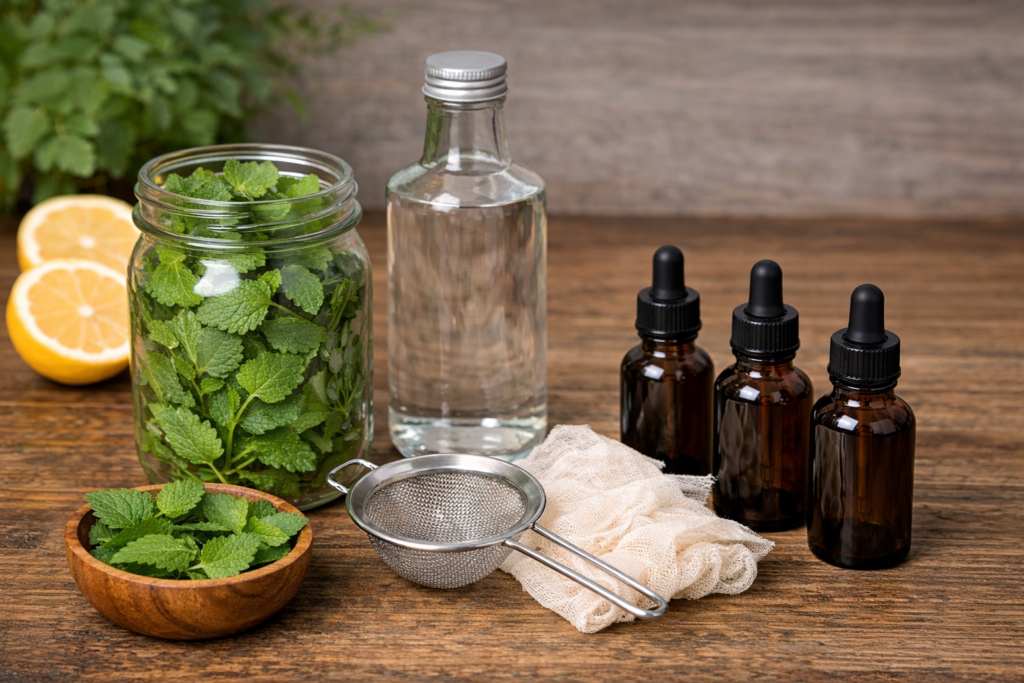
- 1 cup fresh lemon balm leaves
- 1½ cups vodka or 40 percent alcohol
- glass jar with lid
- strainer or cheesecloth
- dark dropper bottles
Instructions
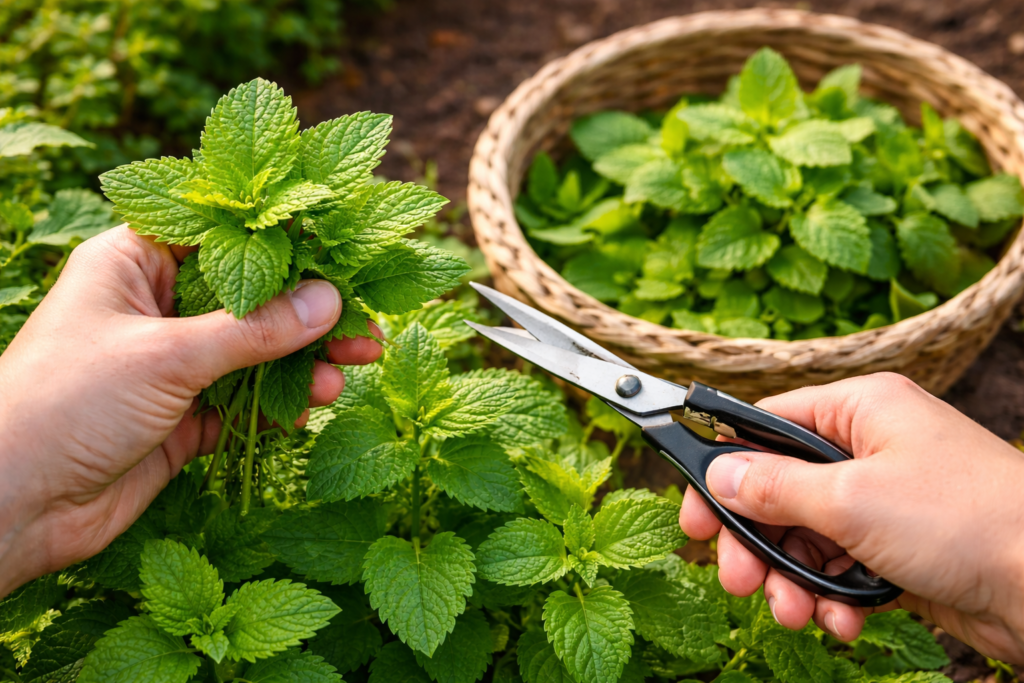
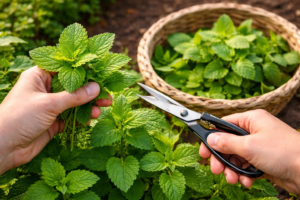
- Harvest fresh lemon balm leaves.
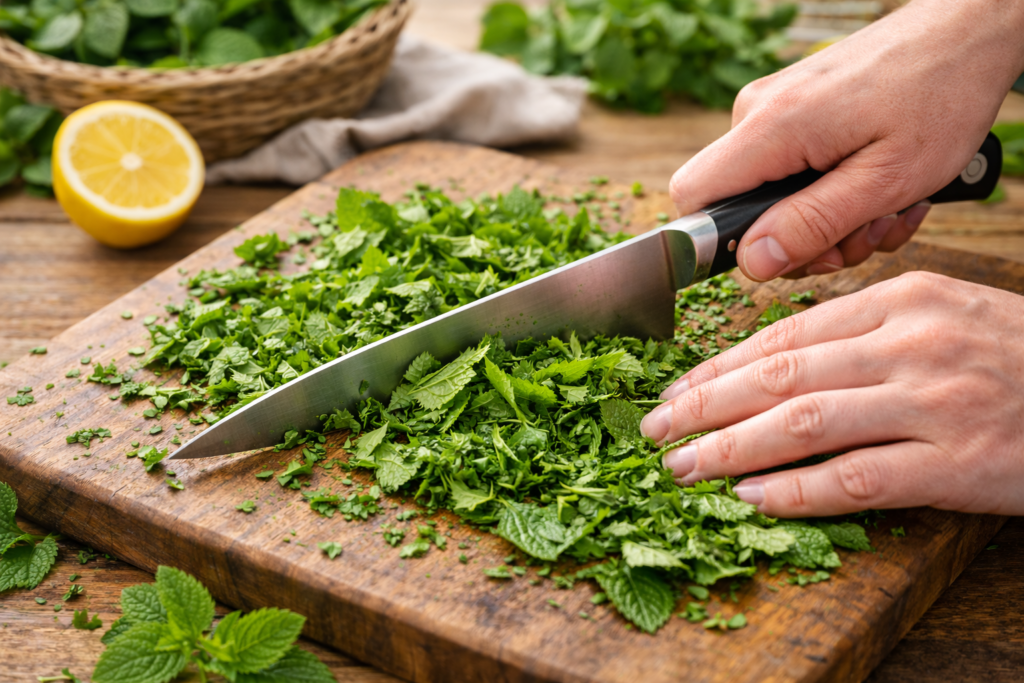
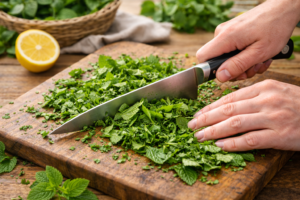
2. Roughly chop the leaves to release oils.
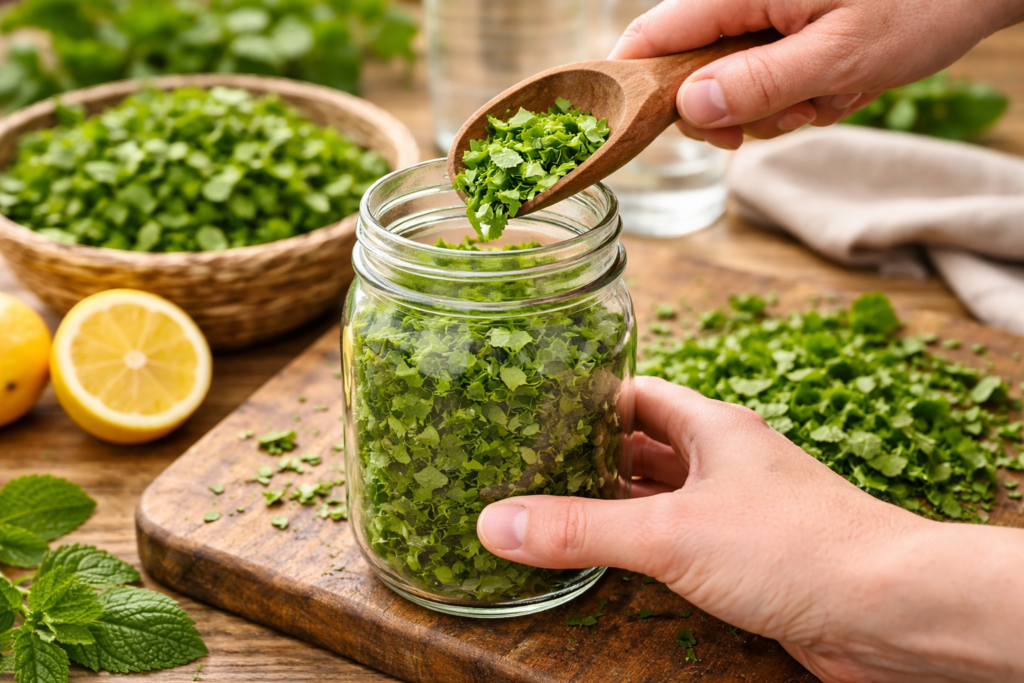
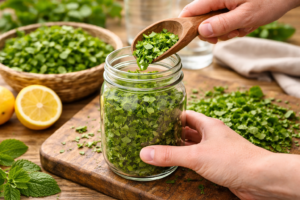
3. Fill a clean jar about three quarters full with the herb.
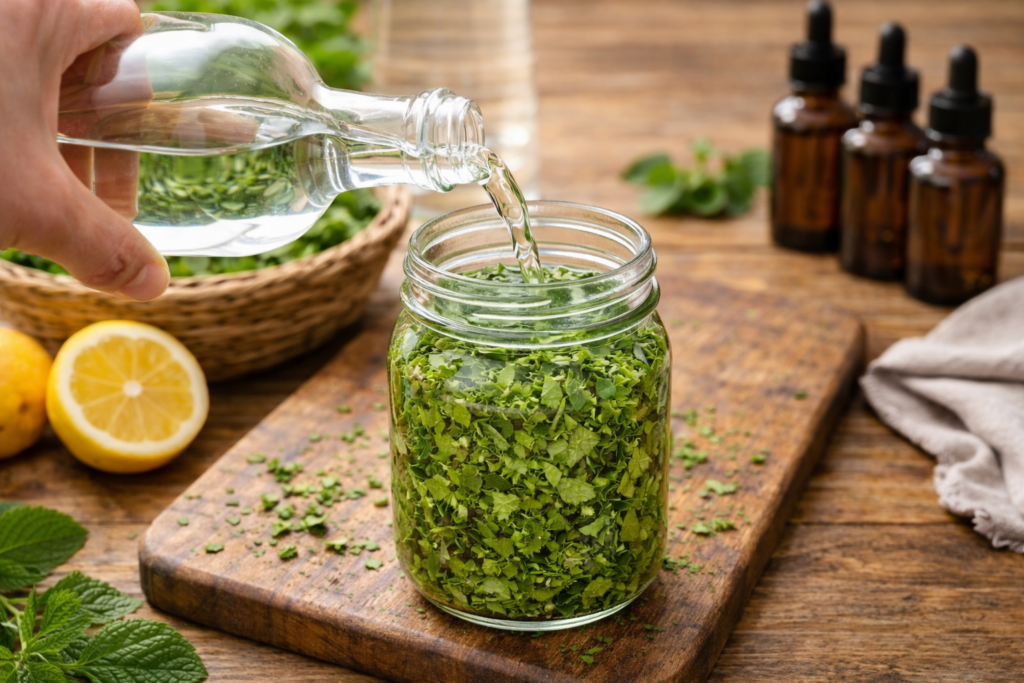
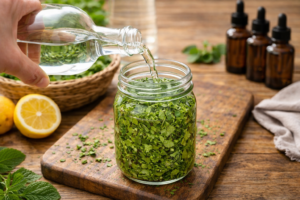
4. Pour alcohol over the leaves until completely covered.
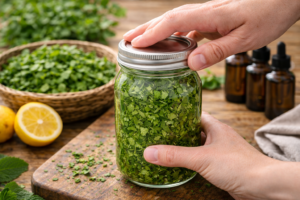
5. Seal the jar tightly.
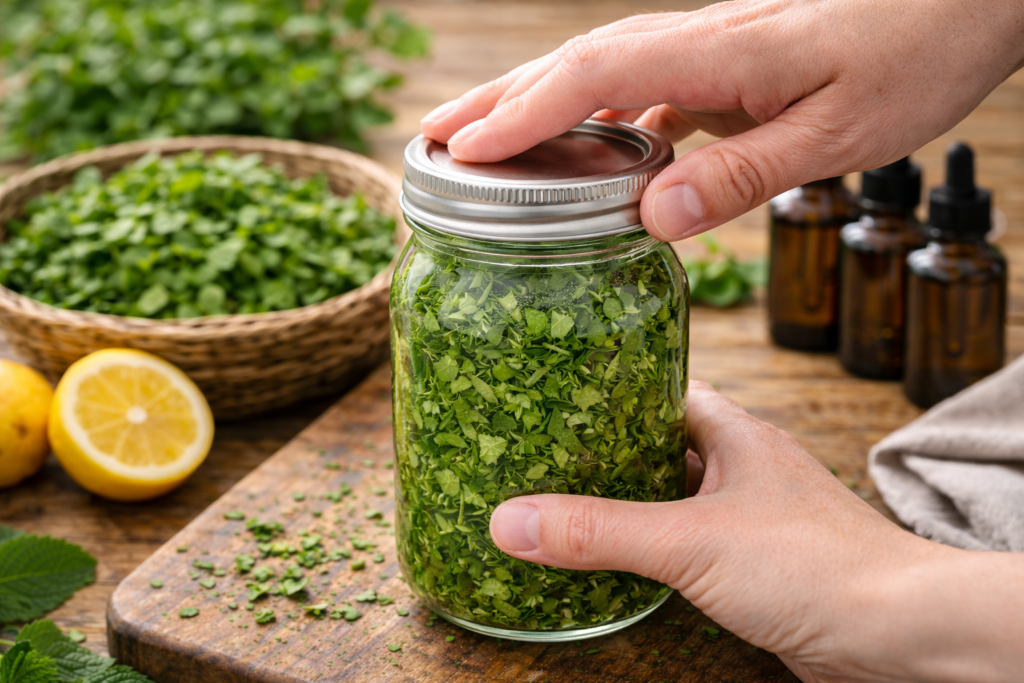
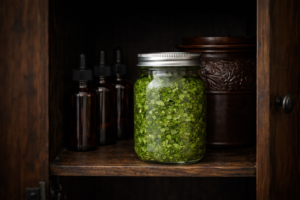
6. Store in a cool dark place.
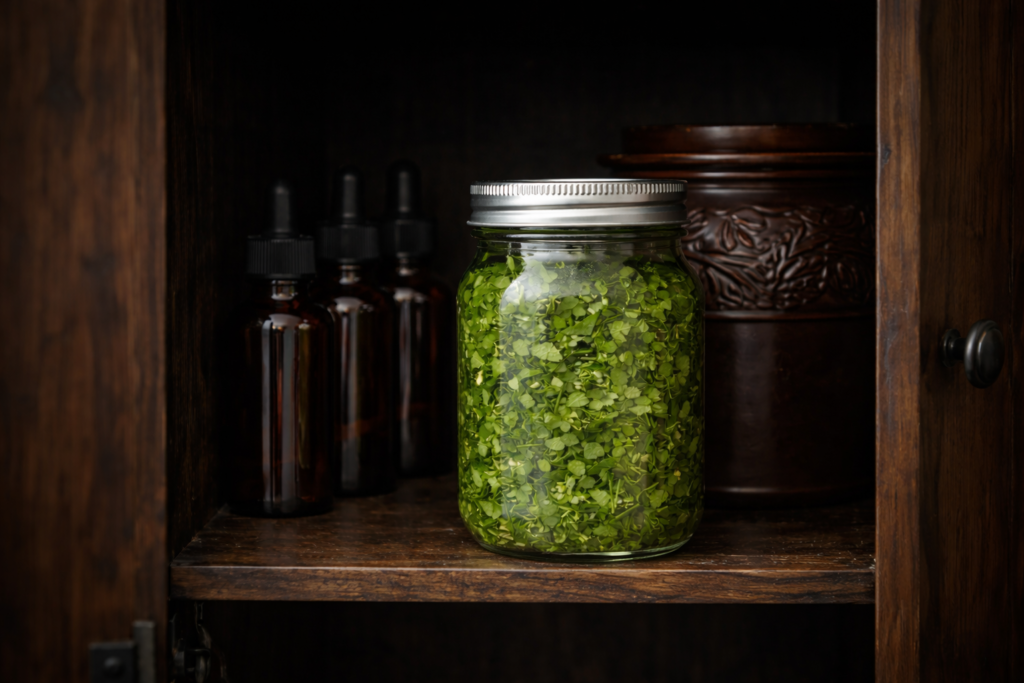
7. Shake the jar once daily.
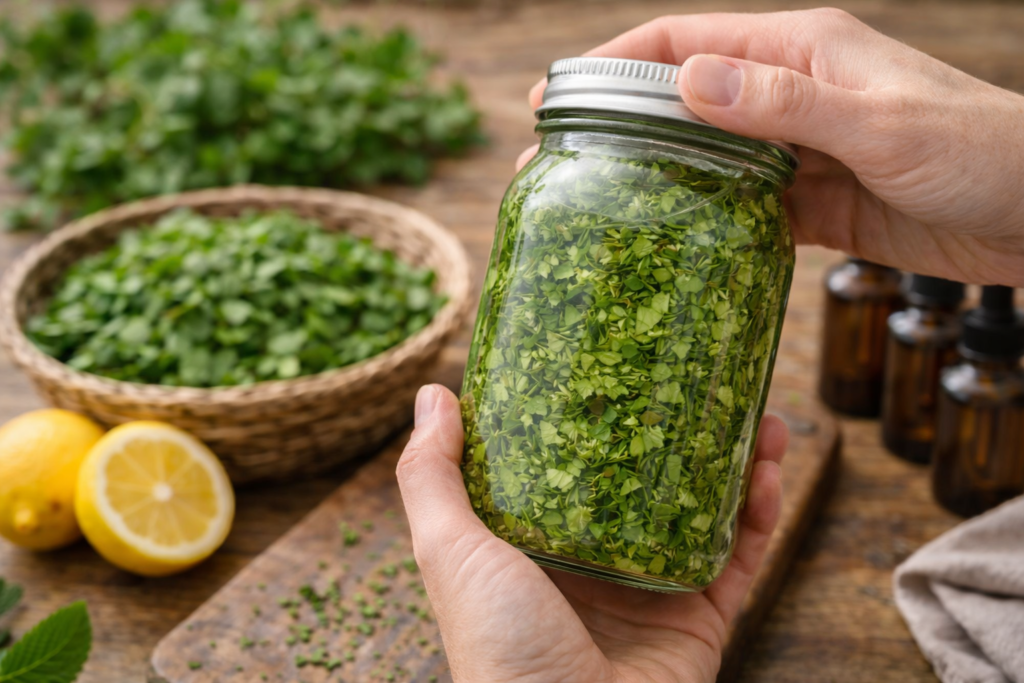
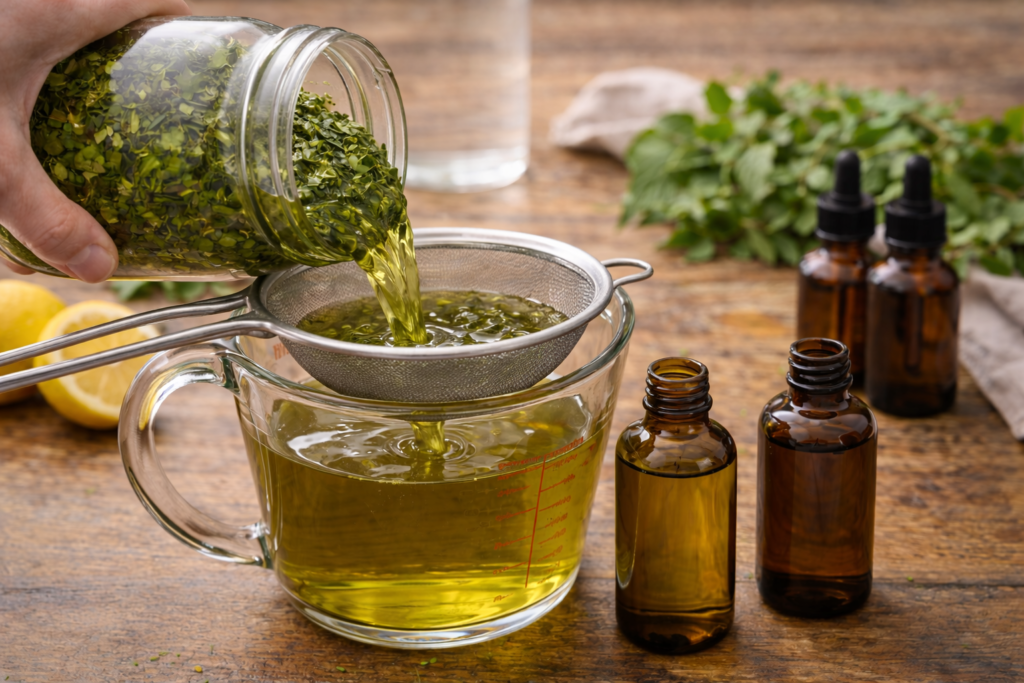
8. After several weeks strain the liquid into glass bottles.
Herbal tinctures usually infuse for 4 to 6 weeks before straining.
Infusion Timeline
This timeline helps readers understand the process.
| Day | What Happens |
|---|---|
| Day 1 | Fill jar with lemon balm and alcohol |
| Week 1 | Shake daily to distribute plant compounds |
| Week 2 | Alcohol begins extracting active constituents |
| Week 4 | Tincture becomes aromatic and concentrated |
| Week 6 | Ready to strain and bottle |
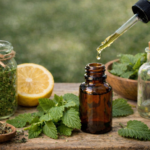
Homemade Lemon Balm Tincture Recipe
Equipment
- glass jar with lid
- cutting board
- knife or herb scissors
- measuring cup
- cheesecloth or fine mesh strainer
- funnel
- dark glass dropper bottles
- label or marker for dating the tincture
Ingredients
- 1 cup fresh lemon balm leaves
- 1½ cups vodka or 40% alcohol
Instructions
- Harvest fresh lemon balm leaves
- Roughly chop the leaves to release their oils.
- Fill a clean jar about three quarters full with the herb.
- Pour alcohol over the leaves until they are completely covered.
- Seal the jar tightly.
- Store the jar in a cool dark place.
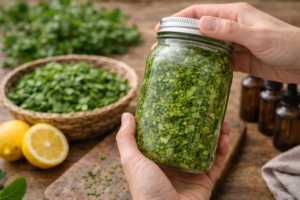
- Shake the jar once daily.
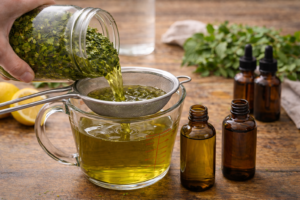
- After 4 to 6 weeks strain the liquid into dark glass bottles.
Notes
How to Use Lemon Balm Tincture
A common herbal tincture dose is 10 to 30 drops, taken one to three times per day.
You can place the drops under your tongue and hold them there briefly before swallowing. Many people prefer this method because the herbal compounds can be absorbed quickly.
If you do not like the taste, you can also add the drops to water, tea, or juice.
People often take tinctures during stressful moments, before bedtime, or when they feel anxious, depending on the herb and their personal needs.
Always start with a small amount to see how your body responds. You can slowly increase the dose if needed.
Tips for the Best Lemon Balm Tincture
Harvest in the morning
Essential oils are strongest before the heat of the day.
Use fresh leaves
Fresh herbs contain more volatile oils.
Store in dark bottles
Light can degrade plant compounds.
Label everything
Include the herb name and date.
Frequently Asked Questions
What is lemon balm tincture used for?
Lemon balm tincture is commonly used to support relaxation, improve sleep, soothe digestion, and reduce stress. The herb contains compounds that interact with the nervous system and promote calmness.
How long should lemon balm tincture infuse?
Most herbalists recommend infusing lemon balm tincture for 4 to 6 weeks for optimal extraction of beneficial compounds.
Can you use dried lemon balm for tincture?
Yes. Use about half the amount of dried herb compared to fresh lemon balm.
How much lemon balm tincture should you take?
Typical herbal dosing ranges from 20 to 40 drops up to three times per day, depending on the individual.
Does lemon balm tincture help anxiety?
Many people use lemon balm to support stress relief. Studies suggest it may promote calmness by influencing neurotransmitters such as GABA.
Final Thoughts
Lemon balm tincture is one of the simplest herbal remedies you can make at home. With just a handful of fresh leaves and a jar of alcohol, you can create a calming extract that lasts for years.
Whether you use it for relaxation, better sleep, or digestive comfort, this gentle herb has been valued in herbal traditions for centuries.
And the best part is that if you grow lemon balm in your garden, you already have everything you need.
Looking for more herbal remedies? Explore my other homemade tincture recipes to find simple ways to preserve and use beneficial herbs at home. If you would like to learn more about the herb itself, this evidence based overview of lemon balm benefits and medicinal uses explains the research behind it.
Similar Posts
-
Lemon Balm Tea: Benefits, Recipe, Side Effects, and Best Time to Drink It
Lemon balm tea is a gentle herbal drink with a fresh citrus scent and a soft, calming taste. Many people enjoy it when they want something warm without caffeine, especially in the evening or after a long day. It is easy to prepare, pleasant to drink, and popular among readers looking for simple herbal wellness…
-
Turmeric Tincture Recipe: Benefits, Uses, and How to Make It
A Turmeric Tincture Recipe is one of the most practical ways to turn fresh turmeric root into a simple herbal extract you can keep on hand for months. If you love natural wellness, homemade remedies, and plants that feel both grounding and powerful, this is one of those preparations that quickly becomes a favorite. Fresh…
-
Lemon Balm Tincture: 5 Benefits and an Easy Recipe to Make at Home
If you grow lemon balm in your garden, you may already know how fragrant and calming this herb is. But turning it into a lemon balm tincture is one of the most powerful ways to preserve its healing properties. A tincture is simply a concentrated herbal extract made by soaking herbs in alcohol. This process…