
10 Essential Home Apothecary Recipes for Beginners
A home apothecary is a simple way to keep natural remedies on hand for everyday wellness. With just a few apothecary essentials and common herbs, you can make teas, tinctures, salves, and more. Here are 10 beginner-friendly home apothecary recipes with step-by-step instructions and their benefits.
Table of Contents
What Are Home Apothecary Recipes?
Home apothecary recipes are simple homemade herbal preparations you can keep on hand for everyday wellness. They often use beginner-friendly ingredients like dried herbs, honey, vinegar, carrier oils, and clean glass jars to make teas, tinctures, salves, syrups, oxymels, and infused remedies.
These home apothecary recipes are meant to be easy starting points, so you can build a small natural remedy shelf at home without needing complicated tools or a huge herb collection.
1. Calming Chamomile & Lavender Tea
What it’s for: Relaxation, easing stress, and better sleep.
Ingredients:
- 1 tsp dried chamomile
- ½ tsp dried lavender
- 1 cup boiling water
Instructions: Place herbs in a mug, pour boiling water over them, cover, and steep for 5–7 minutes. Strain and drink before bedtime.
2. Peppermint Digestive Tea
What it’s for: Soothes upset stomach, eases bloating, and freshens breath.
Ingredients:
- 1 tsp dried peppermint
- 1 cup boiling water
Instructions: Steep peppermint in boiling water for 5 minutes. Strain and enjoy after meals.
3. Lemon Balm Stress Tincture
What it’s for: Reduces anxiety, promotes calm, and supports focus.
Ingredients:
- Fresh lemon balm leaves
- Vodka (40% alcohol)
Instructions: Fill a small jar halfway with chopped lemon balm, cover completely with vodka, seal, and store in a dark cupboard for 4–6 weeks, shaking every few days. Strain into a dropper bottle. Take 10–20 drops in water or tea as needed.
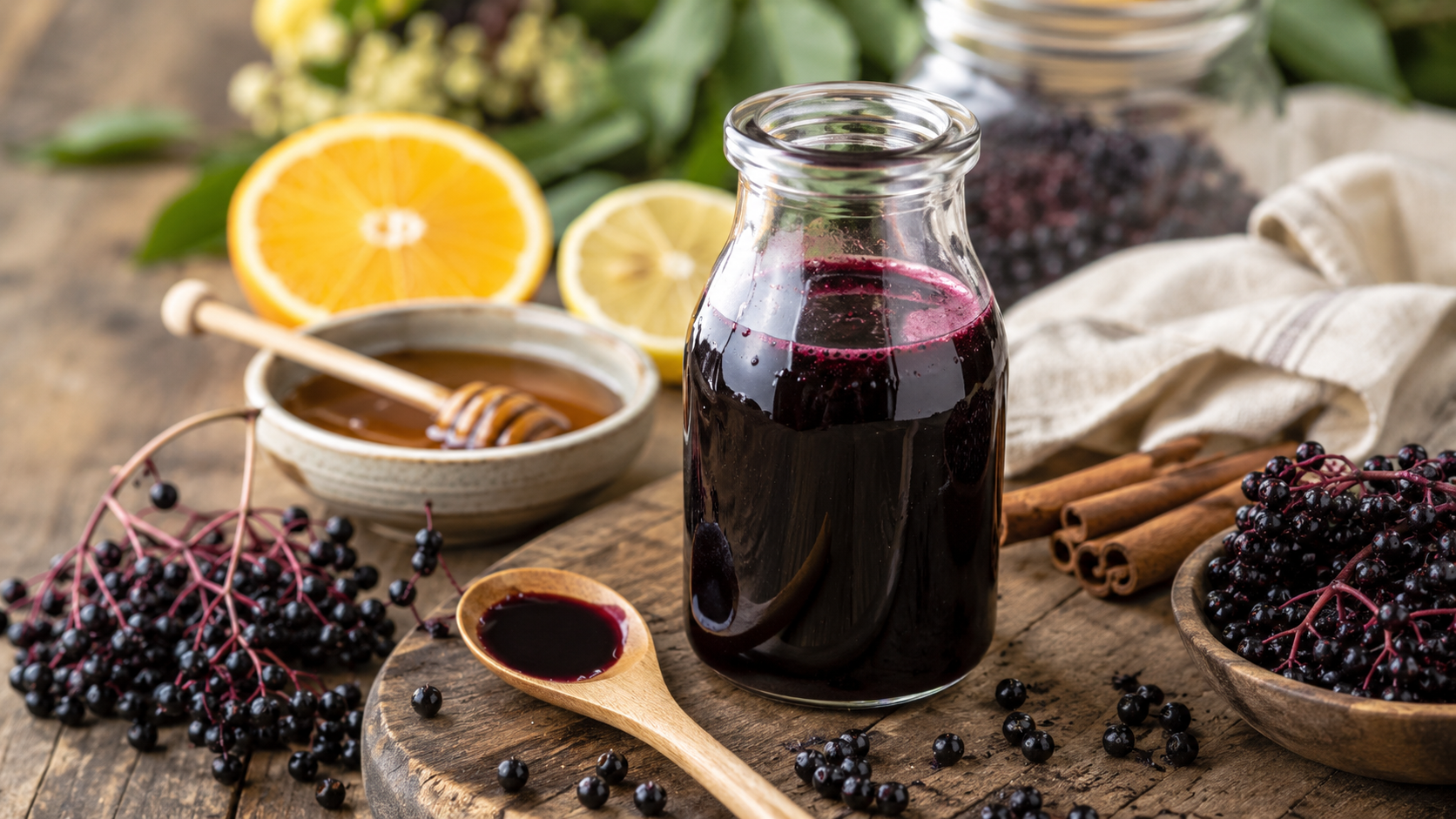
4. Elderberry Immune Syrup
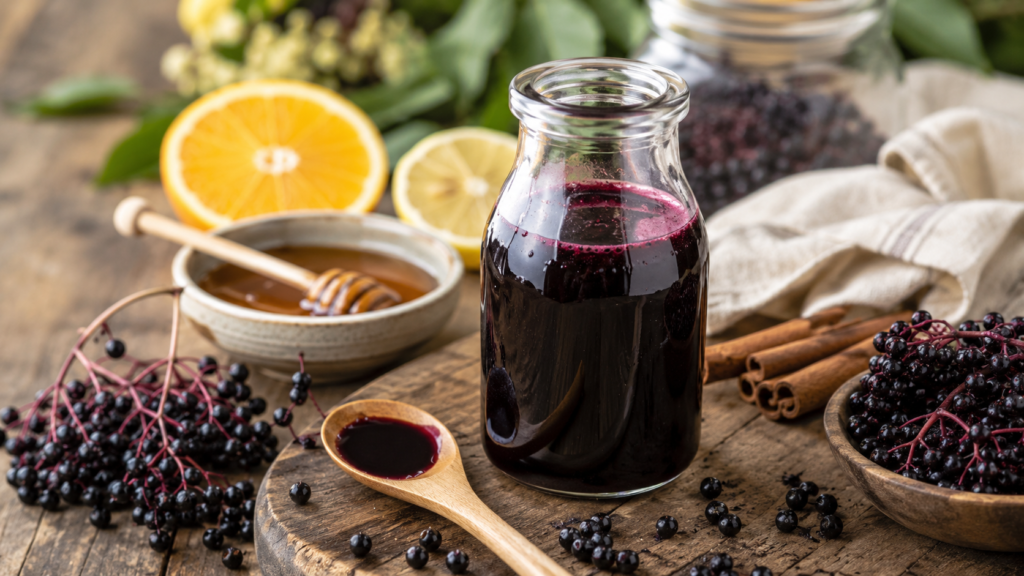
What it’s for: Immune support during cold and flu season.
Ingredients:
- 1 cup dried elderberries
- 4 cups water
- 1 cup raw honey
Instructions: Simmer elderberries in water for 45 minutes. Strain and cool. Stir in honey and store in the fridge for up to 2 months. Take 1 tsp daily for prevention or 3 tsp daily if sick.
5. Calendula Healing Salve
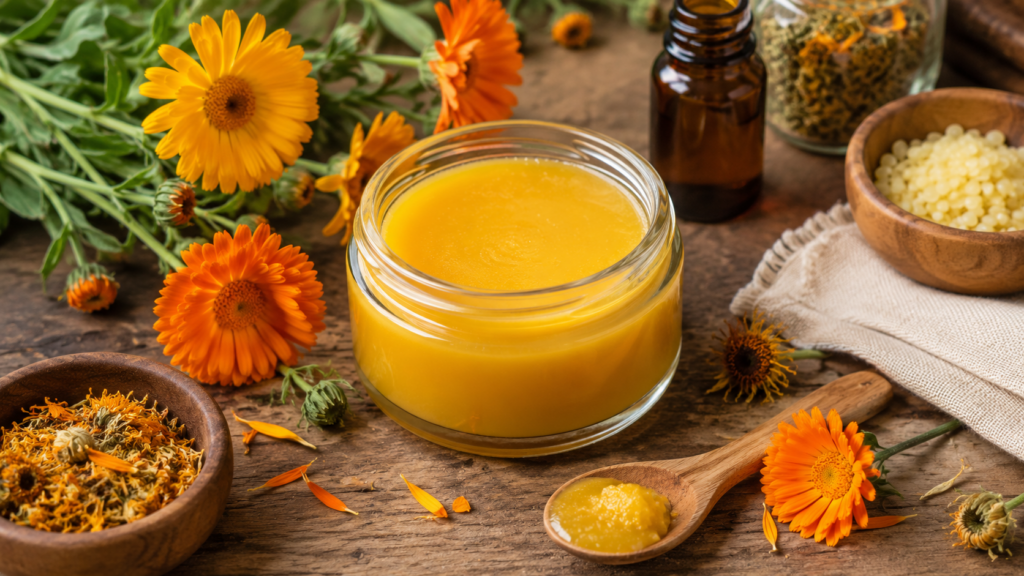
What it’s for: Dry skin, minor cuts, burns, and chapped lips.
Ingredients:
- ½ cup calendula-infused olive oil
- 2 tbsp beeswax
Instructions: Melt beeswax in a double boiler, stir in infused oil, pour into tins or jars, and let cool. Apply to affected skin as needed.
6. Ginger-Honey Oxymel
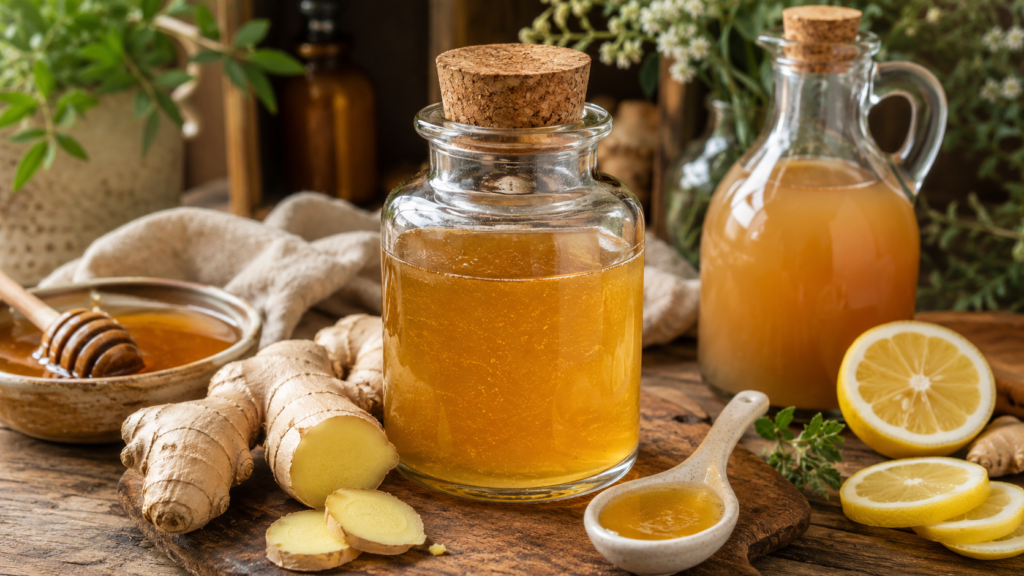
What it’s for: Sore throats, cough relief, and digestive support.
Ingredients:
- Equal parts raw honey and apple cider vinegar
- 2 tbsp fresh grated ginger
Instructions: Mix ingredients in a jar, seal, and let infuse for 1–2 weeks, shaking daily. Strain and store in the fridge. Take 1 tsp in warm water.
7. Rosemary Hair Rinse
What it’s for: Promotes hair shine, strengthens strands, and supports scalp health.
Ingredients:
- 2 cups boiling water
- 2 tbsp dried rosemary
Instructions: Steep rosemary in boiling water for 30 minutes, strain, and cool. Pour over hair after shampooing.
8. Garlic Honey
What it’s for: Natural antibiotic for colds, sore throats, and immunity.
Ingredients:
- 1 cup raw honey
- 6–8 cloves garlic, peeled and lightly crushed
Instructions: Place garlic in a jar, cover with honey, seal, and let infuse for at least 3 days before use. Take 1 tsp as needed.
9. Thyme Cough Syrup
What it’s for: Relieves coughs and congestion.
Ingredients:
- 1 cup water
- 2 tbsp dried thyme
- ½ cup raw honey
Instructions: Simmer thyme in water for 10 minutes, strain, cool slightly, then stir in honey. Store in the fridge for up to 3 weeks. Take 1 tsp every few hours as needed.
10. Herbal Steam Inhalation
What it’s for: Clears sinuses and eases breathing during colds.
Ingredients:
- 1 bowl of hot water
- 1 tsp dried eucalyptus or peppermint leaves
Instructions: Add herbs to hot water, lean over the bowl with a towel over your head, and inhale the steam for 5–10 minutes.
How to Store Home Apothecary Recipes Safely
When you make home apothecary recipes, storage is just as important as the recipe itself. Herbal preparations are usually made in small batches because they do not always contain strong preservatives like store-bought products. This means they should be stored carefully, labeled clearly, and checked before each use.
A simple home apothecary works best when every jar and bottle has a label with the recipe name and the date it was made. This is especially helpful for tinctures, infused oils, syrups, salves, and dried herb blends. Even easy home apothecary recipes can become confusing later if several jars look similar on the shelf.
For water-based recipes like syrups, teas, and steam blends, it is best to make smaller amounts and store them in the fridge when needed. Oil-based recipes like salves and infused oils usually last longer, but they should still be kept away from heat, sunlight, and moisture.
Glass jars, amber bottles, and small tins are great for home apothecary recipes because they keep everything neat and easy to use. A cool, dark cabinet is usually better than a sunny windowsill, especially for herbs, oils, and tinctures.
Before using any herbal recipe, always check the smell, color, and texture. If something smells strange, looks cloudy, grows mold, or changes in a way that seems unusual, it is better to throw it away and make a fresh batch.
Home apothecary recipes are a beautiful way to use herbs at home, but they should still be treated with care. Start with simple recipes, make small batches, and keep your herbal shelf organized so it stays useful, safe, and easy to enjoy.
Another helpful tip is to keep a small notebook or printable list with your favorite recipes, dates, ingredients, and how you used them. This makes it easier to remember which herbal preparations you liked most and which ones you want to make again. Over time, your home apothecary recipes will feel more personal, organized, and useful for your everyday routine.
Final Tip:
When you start a home apothecaryr, keep your herbs and remedies in labeled glass jars or bottles, stored away from heat and light. Replace dried herbs yearly to keep your recipes potent and effective.
If you want to grow some of the ingredients yourself, my full guide on medicinal herbs to grow at home is a great place to start with beginner-friendly herbs for teas, tinctures, salves, and simple home apothecary recipes.
Before using herbs regularly, especially if you take medication or are pregnant, it is helpful to check the official NCCIH Herbs at a Glance guide for safety notes, side effects, and possible herb interactions.