What Plants Can Be Planted Together? 17 Best Companion Planting Ideas
If you want a garden that grows stronger, looks fuller and feels easier to care for, companion planting is one of the simplest places to start. Instead of placing plants randomly, you grow certain herbs, vegetables and flowers near each other because they can support the same growing conditions, attract helpful insects or make better use of space.
Companion planting does not mean every plant pair will magically solve garden problems. Plants still need the right soil, water, sunlight and spacing. But when you choose good neighbors, your garden can become more balanced and easier to manage.
This guide explains what plants can be planted together, which combinations are especially useful and which plant pairs are better kept apart.
Table of Contents
What Is Companion Planting?
Companion planting is the practice of growing plants together because they may benefit from being near each other. Some plants attract pollinators. Others bring in beneficial insects, provide light shade, improve soil use or help confuse certain pests with their scent.
For example, basil is often planted near tomatoes, marigolds are popular around vegetable beds and dill can attract helpful insects when it flowers.
The most important rule is simple. Plants that grow together should enjoy similar conditions. A sun loving herb that likes dry soil usually does not belong next to a thirsty leafy green. When you plan companion planting, always think about sunlight, water needs, soil type, height and space.
Why Companion Planting Works in the Garden
Companion planting works best when it supports the natural rhythm of your garden. Instead of filling a bed with only one type of plant, you mix plants with different roles.
Some plants grow tall and provide light shade. Some stay low and help cover bare soil. Some flowers attract bees and butterflies. Some strong scented herbs can make it harder for pests to find their favorite crop.
A good companion planting plan can help with:
Better use of garden space
More pollinators around vegetables and herbs
A more balanced garden with flowers, herbs and crops
Fewer bare spots where weeds can grow
A healthier looking and more attractive garden bed
It is also a beautiful way to design a kitchen garden because vegetables, herbs and flowers can grow together instead of being separated into plain rows.
1. Tomatoes and Basil
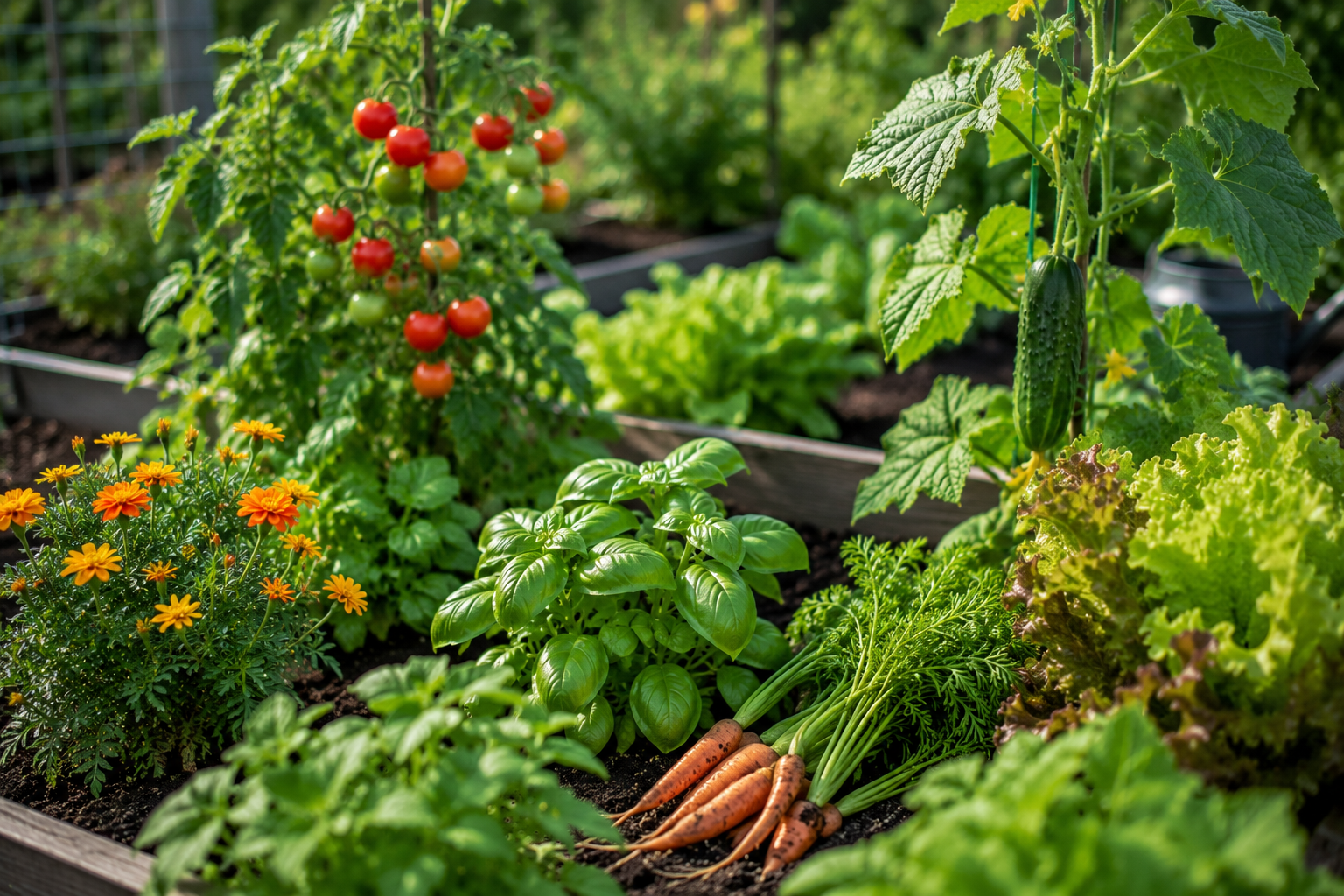
Tomatoes and basil are one of the most loved companion planting pairs. They both enjoy warm weather, sunny spots and regular watering. Basil fits well around tomato plants because it stays smaller and can fill the space below the taller plant.
This pair also works well in a kitchen garden because you can harvest both for the same meals. Fresh tomatoes and basil are perfect for salads, sauces and summer dishes.
Give tomatoes enough airflow and do not crowd the basil too close to the stem. Good spacing helps reduce moisture problems around the lower leaves.
2. Tomatoes and Marigolds
Marigolds are a classic flower for companion planting because they are easy to grow and look cheerful in vegetable beds. They are often planted near tomatoes, peppers and other summer crops.
Their bright flowers attract pollinators and beneficial insects. They also make the garden look full and colorful, which is helpful if you want your vegetable patch to feel more like a cottage garden.
Plant marigolds along the edge of tomato beds or between larger plants where they still receive enough sunlight.
3. Carrots and Onions
Carrots and onions make a practical companion planting pair because they use the soil in different ways. Carrots grow downward as roots, while onions grow more shallowly and upright.
This makes the combination useful in small garden beds where space matters. Their different shapes help you plant more efficiently without having two plants competing in the exact same way.
You can also try carrots with chives or garlic, since these are part of the same general allium family. Keep the soil loose so carrots can grow straight and avoid compacted areas.
4. Cucumbers and Dill
Cucumbers and dill are a great pair for gardeners who like fresh summer harvests. Cucumbers need warmth, water and space to climb or spread. Dill brings a light, airy texture to the garden and can attract beneficial insects when it flowers.
This companion planting combination works especially well if you grow cucumbers on a trellis. The trellis keeps the cucumbers off the soil, while dill can grow nearby without being smothered.
Do not let dill completely shade young cucumber plants. Place it slightly to the side so both plants can grow well.
5. Lettuce and Radishes
Lettuce and radishes are perfect for quick spring or fall garden beds. They both grow fast and do not need a long season. Radishes can be harvested early, leaving more space for lettuce as it expands.
This is a smart companion planting idea for beginners because both crops are easy to sow from seed. It also works well in raised beds and containers.
For the best results, keep the soil evenly moist. Lettuce can turn bitter in heat, so grow this pair during cooler parts of the season.
6. Beans and Corn
Beans and corn are often used together because they create a useful vertical garden structure. Corn grows tall and can act as support, while climbing beans grow upward.
This pair is part of traditional companion planting systems because the plants use space in different ways. Beans are also legumes, which means they are known for their role in soil nitrogen processes.
If you use this combination, give the corn time to grow strong before beans climb heavily. Young corn stalks can bend if beans start climbing too early.
7. Squash, Corn and Beans
Squash, corn and beans are one of the most famous companion planting groups. Corn grows tall, beans climb and squash spreads across the ground. Together, they create layers in the garden.
The squash leaves help shade the soil, which can reduce moisture loss. Beans climb upward and corn provides height. This combination needs a good amount of space, so it is better for garden beds than small containers.
Use this group when you want a productive, full garden area with a natural look.
8. Peppers and Basil
Peppers and basil enjoy similar growing conditions. Both like warmth, sun and regular care. Basil grows well around the base of pepper plants as long as it does not crowd them.
This is a helpful companion planting pair for raised beds and patio containers. It also looks neat because basil stays compact if you harvest it regularly.
Plant peppers in the sunniest part of the bed and place basil nearby where it can still get enough light.
9. Strawberries and Borage
Borage is a beautiful flowering herb with blue star shaped flowers. It is often used in companion planting because it attracts bees and other pollinators.
Strawberries benefit from pollinator activity, so adding borage nearby can be a lovely choice. Borage can grow quite large, so give it space and do not plant it too close to small strawberry crowns.
This pair works best along the edge of a strawberry bed or in a nearby corner where borage can flower freely.
10. Cabbage and Thyme
Cabbage, kale and broccoli belong to the brassica family. They can attract pests, so many gardeners like to place aromatic herbs nearby.
Thyme is a low growing herb that enjoys sun and well drained soil. It can be planted near cabbage as part of a companion planting plan, especially around the edges of a bed.
Make sure thyme does not sit in wet soil. If your cabbage bed is very rich and moist, plant thyme slightly raised or in a nearby container.
11. Rosemary, Thyme and Sage
Mediterranean herbs are some of the easiest plants to group together because they enjoy similar conditions. Rosemary, thyme and sage all prefer sun, warmth and well drained soil.
This companion planting group is ideal for a dry herb bed, a sunny border or a large container. These herbs do not like constantly wet roots, so avoid placing them with water hungry plants.
You can also add oregano or lavender to this type of herb garden if the location is sunny and the soil drains well.
12. Parsley and Chives
Parsley and chives make a useful herb pair for kitchen gardens. Chives grow upright and produce pretty purple flowers, while parsley has soft green leaves and a different texture.
This companion planting idea works well near vegetables, in raised beds or in pots close to the kitchen door. Both herbs are easy to harvest and useful in everyday cooking.
Parsley likes a little more moisture than Mediterranean herbs, so it usually fits better with chives than with rosemary or lavender.
13. Mint and Containers
Mint is useful, fragrant and beautiful, but it can spread quickly. Because of this, mint is best treated differently in companion planting.
Instead of planting mint directly into a mixed garden bed, grow it in a pot. You can place the container near vegetables, herbs or seating areas without letting the roots take over the soil.
Mint can be a helpful garden plant, but only when you control it. A container is the safest choice.
14. Nasturtiums and Cucumbers
Nasturtiums are colorful flowers with edible leaves and blooms. They are often used in vegetable gardens because they attract pollinators and bring a bright, natural look to beds.
They pair nicely with cucumbers because both enjoy sun and summer growing conditions. Nasturtiums can trail along bed edges while cucumbers climb a trellis.
This companion planting pair is also beautiful in cottage gardens, raised beds and balcony gardens.
15. Marigolds and Beans
Marigolds can be planted near beans to add color and attract beneficial insects. Beans grow upward or in bush form, while marigolds fill gaps around the bed.
This is a simple companion planting choice when you want a vegetable garden that looks decorative instead of plain. It is also helpful for gardeners who want flowers mixed into food growing spaces.
Choose compact marigold varieties if your bed is small.
16. Chamomile and Herbs
Chamomile is a gentle flowering herb that fits beautifully into a herb garden. It attracts beneficial insects and adds a soft, meadow style look.
You can grow chamomile near many herbs, especially in a sunny garden bed. It pairs well visually with parsley, basil, thyme and other kitchen herbs.
For a tidy garden, harvest chamomile flowers regularly or cut plants back when they become too large.
17. Lettuce and Tall Summer Crops
Lettuce can grow well near taller plants that provide light shade during warmer weather. Tomatoes, peppers or trellised cucumbers can create a little protection from strong afternoon sun.
This companion planting idea is useful in summer, especially if your lettuce tends to wilt or bolt too quickly. The goal is not deep shade, but gentle filtered shade.
Plant lettuce where it still receives morning light and keep the soil consistently moist.
Plants You Should Not Plant Together
Good companion planting also means knowing which plants to keep apart. Some plants compete too much, attract the same pests or prefer very different conditions.
Here are a few combinations to avoid:
Mint directly in open garden beds with delicate herbs
Fennel near most vegetables and herbs
Onions or garlic too close to beans and peas
Potatoes close to tomatoes
Water loving herbs next to dry loving Mediterranean herbs
Crowded brassicas planted all together without diversity
The reason is not always that one plant will kill another. Often, the problem is competition, pest pressure, disease risk or different care needs.
Simple Companion Planting Chart
Use this easy chart as a starting point when planning your garden.
Tomatoes grow well with basil, marigolds, parsley and chives.
Peppers grow well with basil, onions, marigolds and oregano.
Carrots grow well with onions, chives, lettuce and rosemary.
Cucumbers grow well with dill, nasturtiums, radishes and beans.
Lettuce grows well with radishes, carrots, strawberries and chives.
Beans grow well with corn, cucumbers, carrots and marigolds.
Cabbage grows well with thyme, dill, mint in pots and chamomile.
Strawberries grow well with borage, lettuce, thyme and chives.
Rosemary grows well with thyme, sage, lavender and oregano.
Parsley grows well with chives, tomatoes, basil and asparagus.
How to Plan a Companion Planting Garden
Start with your main crop. This might be tomatoes, cucumbers, lettuce, peppers or strawberries. Then choose one or two helpful neighbors.
For example, if your main crop is tomatoes, you could add basil for the kitchen and marigolds for flowers. If your main crop is cucumbers, you could add dill and nasturtiums.
Do not overfill the bed. Companion planting works best when every plant has enough room to grow. Crowded plants can trap moisture, reduce airflow and create stress.
Think about these five points before planting:
How much sun does each plant need?
How much water does each plant need?
How tall will each plant become?
Will one plant shade another too much?
Will the roots have enough space?
When these basics match, your plant pairings are much more likely to work.
Best Companion Planting Tips for Beginners
Keep it simple in the first year. Choose a few easy combinations instead of trying to redesign your whole garden at once.
A good beginner garden could include tomatoes with basil and marigolds, cucumbers with dill and nasturtiums, and lettuce with radishes and chives.
Use flowers generously. Marigolds, nasturtiums, calendula, borage and chamomile can make a vegetable garden more attractive while also supporting pollinators and beneficial insects.
Use containers for aggressive herbs. Mint, lemon balm and similar spreading herbs are easier to control in pots.
Observe your own garden. Companion planting is helpful, but every garden is different. Soil, climate, shade, wind and watering habits all matter. Keep notes about which combinations grow best for you.
Final Thoughts
Companion planting is a simple way to create a garden that feels more natural, productive and beautiful. By choosing plants that share similar needs and support each other, you can make better use of space and bring more life into your garden.
Start with a few trusted combinations, such as tomatoes with basil, cucumbers with dill, carrots with onions or rosemary with thyme and sage. Then add flowers like marigolds, nasturtiums and borage to attract pollinators and make the garden more colorful.
The best garden is not only productive. It is balanced, diverse and enjoyable to care for. Companion planting helps you move closer to that kind of garden, one plant pair at a time.
For more herb garden tips, you can also learn how to dry herbs at home with this easy herb drying guide.
For a deeper look at the science and practical benefits of companion planting in home gardens, the University of Minnesota Extension shares helpful guidance for planning mixed vegetable and flower beds.